

Picture this: your flight lands at Maharana Pratap Airport at noon. It is 41°C on the tarmac. By the time the taxi reaches your guesthouse near the old city, you have already sweated through two layers. The hotel rooftop — the one you specifically chose for its Lake Pichola view — is uninhabitable until 7pm. That is Udaipur in late April, and it catches a surprising number of first-time visitors who assumed Rajasthan’s desert tag meant comfortable dry heat at any point in the year.
Udaipur operates differently from Jaipur or Jodhpur. Its position in southern Rajasthan at an elevation of roughly 598 metres moderates its climate slightly — but the ceiling on that moderation is still 42°C in summer and 190mm of rain in July. The usable travel window is real. It is also specific. Within that window, the variation between months matters for your actual experience: what the lake looks like, how much the hotels cost, whether a boat ride to Jag Mandir involves a ten-minute wait or a ninety-minute queue.
This breakdown covers all 12 months with specific data. Temperature ranges, rainfall figures, crowd pressure, pricing patterns, and what each timing window means for specific Udaipur experiences.
Udaipur Month-by-Month: Climate, Crowds, and Prices at a Glance
The table below draws on Udaipur district climate records and hotel occupancy patterns spanning budget guesthouses in the old city to luxury lake-view properties. Crowd index reflects tourist footfall at City Palace and the Lake Pichola boat ghat — the two sites where congestion is most visible.
| Month | Avg High °C | Avg Low °C | Rainfall mm | Crowd Level | Hotel Price Index | Verdict |
|---|---|---|---|---|---|---|
| January | 25 | 8 | 8 | High | High | Good — cold nights, pack layers |
| February | 28 | 12 | 10 | Medium-High | Medium-High | Excellent — best value in peak quality |
| March | 33 | 17 | 8 | Medium | Medium | Strong — Mewar Festival window |
| April | 38 | 22 | 5 | Low | Low | Borderline — mornings workable only |
| May | 42 | 26 | 12 | Very Low | Low | Avoid |
| June | 40 | 26 | 45 | Very Low | Low | Avoid — pre-monsoon humidity spikes |
| July | 33 | 24 | 190 | Very Low | Lowest | Skip — outdoor sites impractical |
| August | 31 | 23 | 170 | Very Low | Lowest | Skip — boat services frequently suspended |
| September | 33 | 22 | 65 | Low | Low | Underrated — green hills, real deals |
| October | 34 | 18 | 15 | Medium | Medium | Good — warmth fading, manageable crowds |
| November | 29 | 13 | 5 | Very High | Very High | Peak — best weather, highest cost |
| December | 26 | 9 | 5 | Very High | Very High | Peak — festive, crowded, expensive |
The pattern is unambiguous. Six months — October through March — deliver workable to excellent conditions. May and June are effectively off-limits for comfortable outdoor sightseeing. July and August require a high tolerance for disruption. September is the window most travel guides overlook entirely.
One thing the table does not show: within the “Very High” crowd categories, the difference between a 20-minute queue at City Palace and a 90-minute one is real and affects trip planning. November and December hit those queue lengths on weekends and public holidays with regularity. Prices also vary significantly by booking lead time — the figures above reflect rates booked 6–8 weeks ahead, which is the median planning window. Book later and the premium climbs further.
October Through February: Five Months, Three Very Different Experiences
Most travel advice collapses October through March into a single “best time” label. That framing is accurate at the category level. It misses the meaningful differences between sub-periods that matter when you are deciding specific travel dates and budgeting for accommodation.
November and December: Best Weather, Highest Cost — Know What You Are Paying For
November is Udaipur at its most functional. Daytime temperatures run 27–30°C. Nights cool to 11–14°C — comfortable with a light jacket, not cold enough to restrict evening activity on the ghats. The air clears after the monsoon, which matters for photography: Lake Pichola reflects the City Palace and the Taj Lake Palace most sharply in this dry winter light.
The Taj Lake Palace, a white marble hotel sitting on a four-acre island in Lake Pichola and one of India’s most recognisable luxury properties, runs approximately ₹35,000–₹50,000 per night for standard rooms in November and December — roughly £330–£475 or USD 420–600. The Oberoi Udaivilas, a resort built on the eastern bank of Lake Pichola in the architectural style of Udaipur’s Mewar palaces, pushes ₹40,000–₹65,000 nightly during the same window. Even the Trident Udaipur, the Oberoi Group’s more accessible mid-tier property on Fateh Sagar Lake, climbs to ₹11,000–₹14,000 nightly in peak season.
The booking implication is direct: if you have not reserved at least three months ahead for November travel, your options at reputable mid-range and above properties will be significantly constrained. Flight prices on IndiGo and Air India — the two carriers operating the most frequent services between Delhi or Mumbai and Udaipur’s Maharana Pratap Airport (IATA: UDR) — run 35–40% higher in November and December than on the same routes in February or September, for equivalent booking lead times.
December carries the same weather quality as November with one addition: Christmas and New Year week pushes prices to their annual ceiling across every accommodation tier. The Shilpgram Crafts Fair runs for ten days in late December at the cultural complex on the western bank of Fateh Sagar Lake — over 400 artisans from Rajasthan and neighbouring states set up there — which gives late December travel a specific cultural anchor worth the premium for the right traveller.
January: Cold Nights and One Overlooked Risk
January daytime highs average 25°C — excellent for walking the old city. Nights drop to 7–9°C, occasionally lower with wind chill. This matters concretely if you are planning post-sunset ghats walks or rooftop dining, which Udaipur’s old city guesthouses heavily promote. Pack a proper layer, not just a light fleece.
The first two weeks of January remain crowded from holiday carry-over. Mid-to-late January sees a noticeable reduction in tourist pressure while weather quality holds. If your dates are flexible and November pricing is outside your range, late January gives you close to the same experience at a modest discount.
February and Early March: The Strongest Case Against Booking November by Default
February is the most undervalued month in Udaipur’s travel calendar. Temperatures warm to 28–30°C during the day. Nights are cool but not cold. Crowds have thinned from the December–January peak by a meaningful margin. The Trident Udaipur, for example, runs approximately ₹7,000–₹9,000 nightly in February — a 30–40% reduction from its November rate for equivalent room types. Old city guesthouses near Lal Ghat, which fill without effort in November, have genuine availability in February without requiring four-month advance planning.
Early March extends this window. The Mewar Festival falls in March or April depending on the Hindu lunar calendar, and timing a March visit around it — the exact date shifts annually by several weeks, so verify around six weeks before departure — adds cultural depth that is difficult to replicate at other times of year.
Festivals That Justify — or Complicate — Your Timing
Udaipur’s festival calendar creates both the strongest reasons to visit at specific times and the most common booking mistakes. Five events are worth understanding before you lock in dates.
- Mewar Festival (March or April) — Udaipur’s defining cultural event. Women carry decorated clay idols of Gangaur, the local goddess of marital happiness, through the old city in a procession ending at Gangaur Ghat on Lake Pichola. The evening images — lanterns on water, traditional dress, the illuminated City Palace backdrop — are among the most photographed in Rajasthan. Unlike larger Indian festivals, the Mewar Festival does not overwhelm the city. Crowds are elevated but manageable. Dates follow the lunar calendar and shift by several weeks each year; confirm the exact date roughly six to eight weeks before travel.
- Gangaur (March or April) — An 18-day observance that runs in parallel with and precedes the Mewar Festival. Primarily a women’s festival honouring the goddess Parvati, with fasting, elaborate dress, and nightly gatherings at the ghats. For travellers, the practical effect is a more active old city each evening near Jagdish Temple and Gangaur Ghat — music, street food stalls, and traditional performances running late into the night.
- Diwali (October or November) — Udaipur’s lake geography makes Diwali visually striking. The illuminated Taj Lake Palace and Jag Mandir island reflect off Lake Pichola on Diwali night in a way that is genuinely impressive. But Diwali week also means peak domestic tourist numbers, pricing equivalent to December, and real competition at every viewpoint on the ghats. If you want Diwali in Udaipur, book four months ahead. The date shifts annually — sometimes October, sometimes early November — so check the 2026 calendar date early.
- Shilpgram Crafts Fair (late December) — A ten-day event at the Shilpgram cultural complex on the west bank of Fateh Sagar Lake. Over 400 artisans from Rajasthan, Gujarat, Goa, and Maharashtra participate. Folk music and dance performances run throughout the day alongside the craft stalls. It functions as a genuine cultural event rather than a tourist market, and it gives late December travel a specific purpose that justifies the premium pricing of that window for travellers interested in traditional textiles, block prints, or Rajasthani metalwork.
- Hariyali Amavasya (July or August) — A monsoon-season festival celebrated at Sajjangarh — the hilltop Monsoon Palace above Udaipur — with music, local food vendors, and the green Aravalli hills as backdrop. It is a local event rather than a tourist-facing production. Relevant only if you are already planning a monsoon visit, which the data above makes a difficult case for justifying.
Late September Earns More Credit Than It Gets
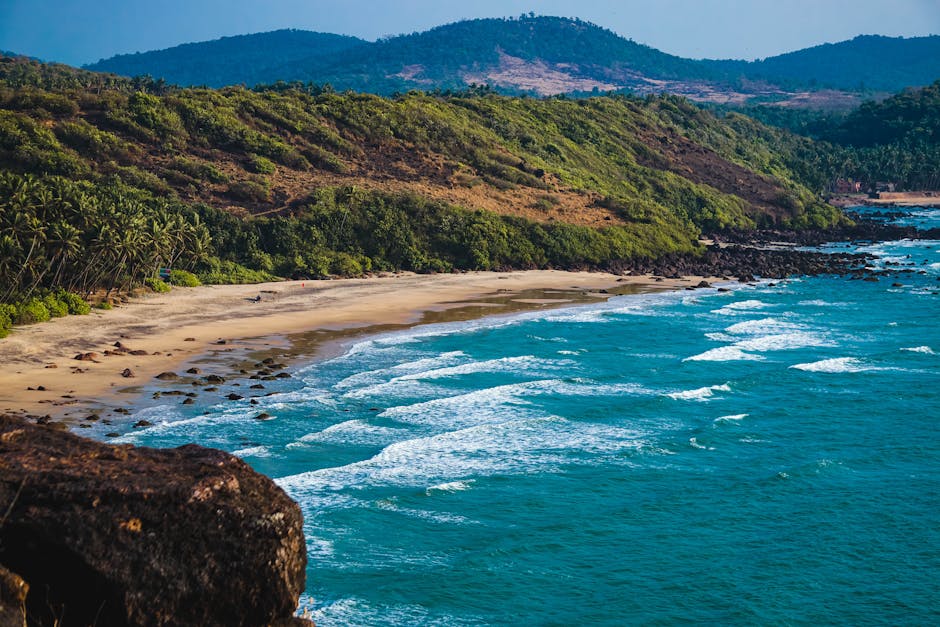
Late September through the first half of October is the most undervalued window in Udaipur’s travel calendar. The monsoon pulls back by mid-September. What it leaves behind: the Aravalli hills in full green, Lake Pichola at its annual high-water mark, and accommodation rates sitting at their lowest point before the October surge begins. The lake is visibly fuller in late September than it will be in January or February — the boat route to Jag Mandir island shows the water at its most dramatic, and this version of the lake is significantly cheaper to access than in November.
The tradeoff is weather certainty. September still carries afternoon shower risk — not July-level sustained downpours, but a two-hour rain window that can affect outdoor timing is realistic. For photographers, the overcast monsoon-exit light over the ghats and palaces is actually preferred for certain compositions. For travellers who require predictability, waiting until the second half of October removes the rain variable entirely while still catching pre-peak pricing before the November surge begins.
The value case for late September is straightforward: similar sightseeing conditions to October, meaningfully lower prices, fewer other tourists, and a greener landscape than anything Udaipur shows between November and August.
Four Timing Mistakes That Derail Udaipur Trips

Does “dry heat” make May and June manageable?
No. Udaipur in May averages 42°C daily highs. At that temperature, the dry-heat argument stops mattering. The City Palace complex — which covers a large outdoor area — becomes hostile between 11am and 4pm. Sunset Point at Dudh Talai hill is completely exposed. Sajjangarh is an uphill drive with no shade at the top. Travellers who arrive in late April regularly find their planned daily itinerary compresses into three usable morning hours and an evening window, which cuts deeply into what can actually be done in a limited number of days.
Is July or August workable with the right mindset?
Only with a specifically indoor-weighted itinerary and genuine flexibility. Udaipur’s July rainfall averages 190mm. Lake Pichola boat services operate on reduced schedules and suspend during heavy rain, which arrives without much warning and can persist for several hours. City Palace is partially covered but its approach routes and outer courtyard areas flood. Sajjangarh road conditions deteriorate. The two-month window genuinely restricts what can be done outdoors, and for most travellers with five to seven days in the city, this is a meaningful constraint rather than a minor inconvenience.
Should you always time a visit around a festival?
Not automatically. The Mewar Festival and Gangaur work because they are scaled for the old city and do not overwhelm it — they add atmosphere without making the ghats inaccessible. Diwali is a different calculation. Diwali week in Udaipur means accommodation at the Taj Lake Palace, Fateh Prakash Palace, and Shiv Niwas Palace hitting their annual price ceiling, and the ghats filling with domestic tourists who have also travelled significant distances for the same viewpoints. If your primary interest is the palaces and lake views at a comfortable pace, Diwali week actively competes with that goal. The fireworks are real. So is the crowd pressure.
Do flight prices to Udaipur follow hotel pricing patterns?
Yes, closely. IndiGo and Air India both price routes to Udaipur (UDR) dynamically, and the November–December premium on direct services from Delhi or Mumbai runs 35–40% above September or February equivalents at comparable booking lead times. One practical note: Maharana Pratap Airport handles significantly fewer daily departures than Jaipur or Delhi. If you are connecting from an international arrival in Mumbai or Delhi, build a minimum four-hour buffer. During monsoon months, weather-related delays at UDR are common and the reduced flight frequency means rebooking options are limited.
The clear verdict: February delivers the best balance of good weather, manageable crowds, and reasonable prices across every cost category. November is the superior weather window but commands a premium on accommodation, flights, and everything in between. Late September earns the strongest value-per-experience ratio in the entire calendar year for travellers who can absorb minimal residual rain risk. May, June, July, and August should be avoided unless a specific festival date or travel constraint makes the timing unavoidable.