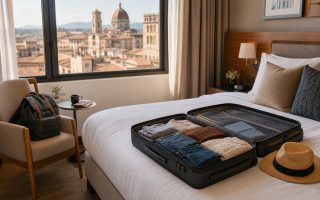

Your connection is 90 minutes, your gate sits at the far end of the terminal, and your legs already feel tight after the first flight. You have enough time to buy food, but not enough time to gamble on a greasy meal that leaves you sleepy before boarding. The best layover routine is simple: move the joints that stayed still, drink steadily, then choose a snack with protein, fiber, or both.
The 10-minute gate-area stretch sequence
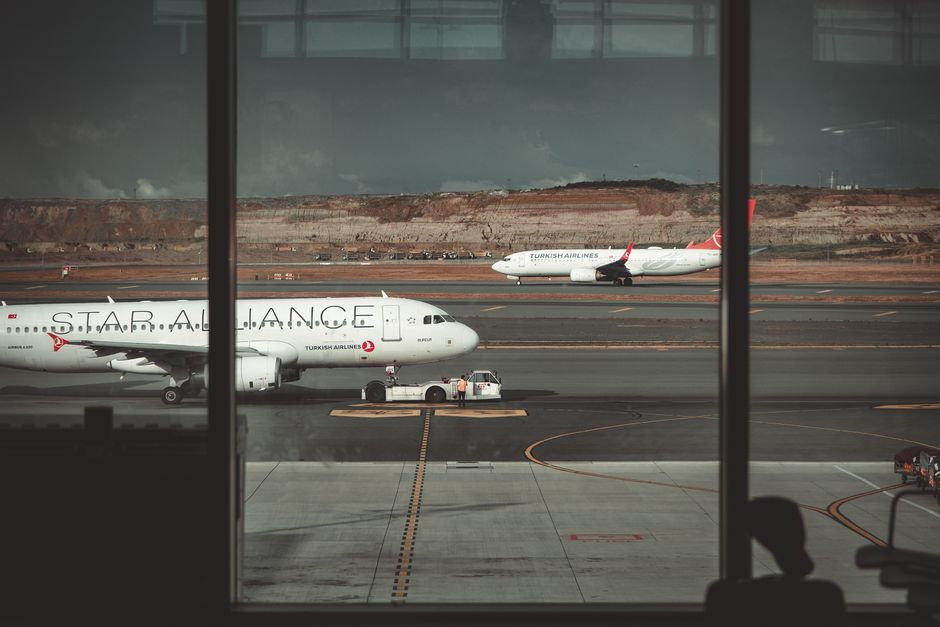
The best airport stretch routine needs no mat, privacy, or floor space. Stand beside your carry-on and move from the feet upward. Stop any movement that causes sharp pain, numbness, or dizziness.
Use this numbered sequence
- Calf raises: Lift both heels for 15 repetitions, pause at the top, then lower slowly.
- Ankle circles: Raise one foot slightly and draw 10 circles in each direction; switch sides.
- Standing quad stretch: Hold one ankle behind you for 20 seconds per side, using your bag or a wall for balance.
- Hip-flexor step: Step one foot back, bend the front knee, and gently tuck your tailbone for 20 seconds per side.
- Shoulder rolls: Roll backward 12 times, then squeeze your shoulder blades for five slow breaths.
- Torso turns: Keep your hips facing forward and rotate your upper body gently 10 times per side.
How to fit the routine around boarding
Start 35 to 45 minutes before boarding if the gate has not posted a final call. Walk to the restroom or water fountain first, complete the sequence near the gate, then stay close enough to hear announcements. Repeat only the calf raises, ankle circles, and shoulder rolls during the final ten minutes. My pick for most travelers is one full sequence per layover plus short walks every 20 minutes, because this gives more benefit than one intense stretch followed by another long sitting period.
Do not bounce, force a deep hamstring stretch, or stretch beside an escalator where people cannot see you. Airport flooring is hard, so keep your shoes on unless you have a clean, quiet space.
Which layover snacks keep energy steady?
Pick snacks by function, not by the word “healthy” on the package. You need enough food to bridge the connection without feeling stuffed on the next flight. Protein helps with fullness, fiber slows the meal, and water supports comfort in the dry cabin.
Best packaged choices for a delayed connection
The RXBAR Chocolate Sea Salt is about 1.83 ounces, provides roughly 12 grams of protein, and commonly lists around $2.49 per bar. It is my best bar pick when you need a compact snack with a chewy texture and no coating that melts in a backpack. The trade-off is density: it can feel heavy if you eat it quickly, so pair it with water.
The KIND Peanut Butter Dark Chocolate bar is usually about 1.4 ounces, with roughly 6 grams of protein and a typical single-bar price near $1.99. Choose it for a shorter layover when you want nuts and a little sweetness, not a full meal. It has less protein than RXBAR, so it ranks second for a long delay.
When a meat stick or drink mix makes sense
A 1.15-ounce Chomps Original Beef Stick often costs about $2.29 and supplies around 10 grams of protein. It wins when you need a salty, compact option, but it contains more sodium than fruit or unsalted nuts. The 16-stick box of Liquid I.V. Hydration Multiplier commonly sells near $24.99; one stick mixed into water can be useful after sweating or a long walk, but it is not a substitute for food and may contain around 500 milligrams of sodium.
For most travelers, my clear choice is a banana plus nuts or an RXBAR plus water. Buy the Chomps stick when airport choices are limited, and skip the drink mix if you already ate a salty meal.
A gate-side plan for 45-, 90-, and 180-minute layovers

Layover length changes the right routine. A 45-minute connection needs a quick reset near the gate; a three-hour connection gives you time for a real walk, a proper meal, and a second movement break. Do not spend the entire connection seated just because the next gate has not opened.
Use the schedule that matches your connection
| Layover | First 10 minutes | Middle block | Final 15 minutes |
|---|---|---|---|
| 45 minutes | Check the gate and walk directly there | Calf raises, ankle circles, water, small snack | Stay near the gate and repeat shoulder rolls |
| 90 minutes | Find the gate, then walk for 10 minutes | Stretch sequence, snack, restroom | Short walk and boarding check |
| 180 minutes | Confirm gate and terminal route | 20-minute walk, balanced meal, full stretch sequence | Second ankle and shoulder reset |
What to eat at each point
For 45 minutes, choose something portable that takes less than five minutes to eat. For 90 minutes, a yogurt, fruit, and nuts can replace a bar if the terminal offers a cold case. For three hours, eat a normal meal with a visible protein source, such as eggs, chicken, tofu, or beans, plus a vegetable or fruit. The verdict is clear: longer layovers reward a proper meal and walking loop, while short connections call for small food and low-risk movement.
Why timing beats willpower
Set a simple rule before sitting down: every time you finish a bottle of water or snack, stand and walk for two minutes. This prevents the common mistake of waiting until your back hurts before moving. Keep your boarding pass and phone accessible, but do not bury yourself in a video that makes you miss a gate change.
What to buy when airport food is your only option
Airport food can still work when you use a clear order of preference. Look first for protein, then produce, then a modest carbohydrate. The goal is not a perfect meal; it is a meal that keeps you alert without making the next flight miserable.
Choose the least complicated plate
At a café, my first choice is Greek yogurt with fruit and nuts. At a sandwich counter, choose turkey, chicken, egg, or hummus, ask for sauce on the side, and eat half the bread if the filling is small. At a convenience shop, combine a banana with the RXBAR Chocolate Sea Salt at about $2.49, or choose the KIND Peanut Butter Dark Chocolate bar near $1.99 when the connection is short.
Know when not to buy the familiar option
Do not buy a giant coffee and pastry combo simply because it is fast. Caffeine may help if you normally drink it, but late caffeine can damage sleep on an overnight trip. Skip the Chomps Original Beef Stick near $2.29 if you already ate a salty meal or if sodium worsens your thirst. Skip an electrolyte mix such as Liquid I.V. if you only want flavor and have not been sweating; plain water is cheaper and enough for most gate waits.
For an early flight, yogurt, fruit, and nuts are the best airport purchase. For a delayed evening connection, half a sandwich and water beat another sweet snack. The winning choice solves the next four hours, not just the next four minutes.
Quick comparison: the best stretch and snack pairing
Use this final comparison when you are tired and want one clear decision. The best pairing depends on the time left, the amount of walking ahead, and how much food you can tolerate before boarding.
Pick the row that matches your problem
| Travel problem | Stretch pairing | Snack pairing | Verdict |
|---|---|---|---|
| Heavy calves after a long flight | 10 calf raises, ankle circles, 5-minute walk | Banana and water | Best low-effort reset |
| Two-hour delay with limited food | Full 10-minute sequence, repeat in 45 minutes | RXBAR Chocolate Sea Salt, about $2.49 | Best compact option |
| Need salt after a long walk | Walk first, then hip-flexor and shoulder stretches | Chomps Original Beef Stick, about $2.29, plus fruit | Best salty option |
| Overnight flight and sleep goal | Gentle walk, ankle circles, no intense stretch | Yogurt, fruit, and water | Best for a calm boarding |
The short answer
For most airport layovers, walk for five minutes, complete calf raises and ankle circles, then eat a small protein-and-carbohydrate snack. Choose an RXBAR for portability, yogurt and fruit for the best full-food option, and a Chomps stick only when salt fits the rest of your day. That routine is cheap, repeatable, and strong enough to carry you through the next flight without turning the gate into a gym.