
You booked the flight. Now what? The Galapagos Islands feel like a different planet — isolated, fragile, and governed by strict rules. Most first-time visitors make the same mistakes: overpacking, underestimating costs, or skipping the right permits. These 14 tips cover what you actually need to know before you go.
1. You Need a Guide — Here’s Why
Independent travel in the Galapagos is nearly impossible. Ecuador requires all visitors to be accompanied by a licensed naturalist guide when visiting national park sites. This isn’t a suggestion. It’s the law.
Most people choose between two options:
- Cruise: 4- to 15-day itineraries. You sleep on the boat, visit remote islands, and have a dedicated guide. Prices range from $2,500 to $8,000 per person for a standard 8-day trip.
- Land-based tour: Stay on a main island (Santa Cruz, Isabela, or San Cristobal) and take day trips. Cheaper — around $1,500 to $3,000 for a week — but you see fewer outer islands.
The cruise is better for serious wildlife photographers and people who want to see the iconic sites like Genovesa Tower or Fernandina. Land-based is fine for families on a budget or anyone prone to seasickness.
What about DIY?
You can book your own flights and hotels, but you still need to join guided day tours for any national park visit. The Galapagos National Park charges a $100 entry fee (cash only, paid at the airport upon arrival).
2. The Best Time to Visit Depends on What You Want to See
There is no single “best” month. The Galapagos has two seasons, and each favors different wildlife activity.
| Month | Weather | Best For |
|---|---|---|
| January – May | Warm (80–85°F), calm seas, occasional rain | Sea lion pups, green sea turtles nesting, water clarity for snorkeling |
| June – December | Cooler (70–75°F), stronger currents, garúa mist | Penguin and albatross sightings, whale sharks (June–November), humpback whales |
If you want calm snorkeling and warm water, go January through May. If you’re after whale sharks or want to see the waved albatross courtship dance (on Española), book between June and September.
3. Pack Light. Seriously. 40 Pounds Max.
Flights from Quito or Guayaquil to the islands have a strict weight limit: 23 kg (50 lbs) for checked luggage, often less for carry-on. But the real constraint is space on boats and in taxis.
Bring a 40-liter backpack or small duffel. Hard-shell suitcases are a pain on Zodiac landings.
What to actually pack
- Two pairs of quick-dry pants or shorts
- Three lightweight synthetic shirts (long sleeves for sun protection)
- One fleece or light jacket (evenings get chilly, especially June–November)
- Waterproof windbreaker
- Reef-safe sunscreen (SPF 50+) — regular sunscreen is banned in the park
- Snorkel mask (rentals are available but often foggy or poorly fitting)
- Water shoes or sturdy sandals with straps
- Binoculars — essential for birdwatchers
Do not pack: drones (banned), single-use plastics (banned on some islands), or heavy hiking boots (you don’t need them).
4. Book Flights and Cruises Early — But Not Too Early
Flights to the Galapagos are limited. Two airlines operate: Avianca and LATAM. They fly from Quito and Guayaquil to Baltra (GPS) or San Cristobal (SCY). Round-trip tickets cost $350–$550.
Book domestic flights 3–4 months ahead. Cruises should be booked 6–12 months out for peak seasons (June–August, December–January). Last-minute deals exist — some agencies offer 30–40% off if you arrive in Puerto Ayora without a booking — but you risk getting stuck with a mediocre boat.
For land-based trips, you can book hotels and day tours 2–3 months in advance. No need to rush.
5. Bring Cash — Cards Don’t Work Everywhere
ATMs on the islands are unreliable. They run out of cash, especially on weekends. Bring enough US dollars (Ecuador uses USD) to cover: park entry fee ($100), Ingala transit card ($20), tips for guides and crew (recommended $15–$20 per day), and any meals or souvenirs.
Most hotels and tour operators accept credit cards with a 3–5% surcharge. Small shops and taxis are cash-only.
6. Don’t Touch the Wildlife — It’s Not Just a Rule, It’s a Fine
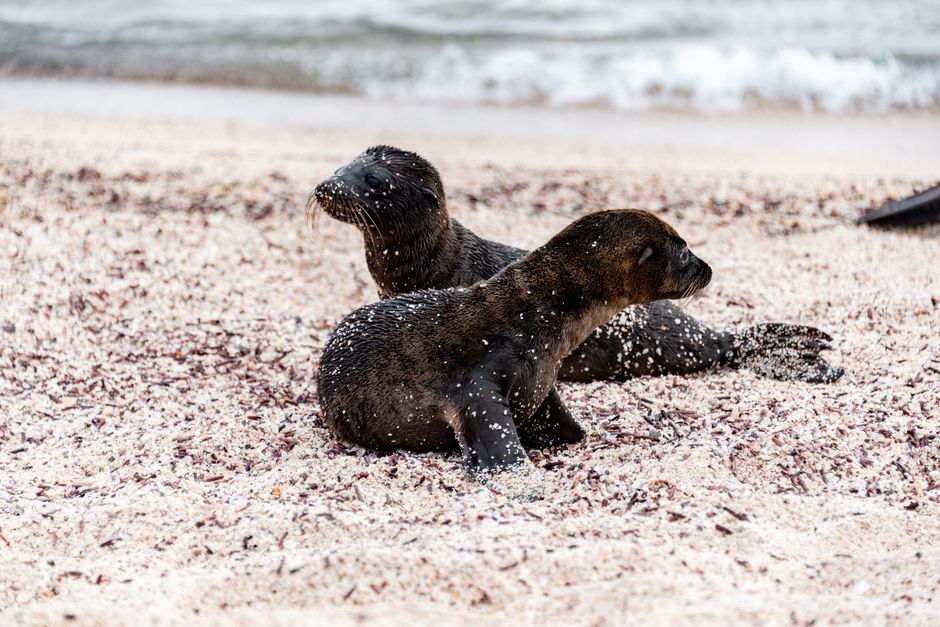
Sea lions will walk right up to you. Blue-footed boobies nest inches from the path. It’s tempting to reach out. Don’t.
The Galapagos National Park requires a minimum distance of 2 meters (6 feet) from all animals. Touching, feeding, or disturbing wildlife carries fines up to $1,500. More importantly, it stresses the animals and can introduce diseases.
If a sea lion blocks your path, wait. It will move. Or walk around it at a safe distance.
7. You Will Get Wet — Prepare for Wet Landings
Most island visits involve a “wet landing” — you step off the Zodiac into knee-deep water and wade ashore. This means your camera, phone, and dry clothes need to be in a waterproof dry bag.
Bring a small dry bag (10–20 liters) for electronics. Leave your main pack on the boat.
Dry landings (on docks or rocky shores) exist but are less common. Either way, wear shoes that can get wet and dry quickly.
8. Snorkeling Is the Best Way to See Marine Life — But Know the Conditions
You don’t need to be a strong swimmer. Most snorkeling sites are calm bays with shallow water. But currents can be strong, especially during the cooler season (June–November).
Rent a wetsuit on the islands ($10–$15 per day). Even in warm months, the water temperature drops to 68–72°F. Without a wetsuit, you’ll be shivering within 20 minutes.
Best snorkeling spots: Kicker Rock (San Cristobal), Tagus Cove (Isabela), and Devil’s Crown (Floreana). Expect sea turtles, white-tip reef sharks, rays, and hundreds of fish.
9. Motion Sickness Is Real — Come Prepared
The ocean between islands is choppy. The “Bolivar Channel” between Isabela and Fernandina is notoriously rough. If you’re prone to seasickness, bring medication.
Options that work for most people:
- Dramamine (dimenhydrinate) — take 30 minutes before boarding
- Scopolamine patches (prescription) — last 3 days, no drowsiness
- Ginger candies or chews — mild prevention
Book a cabin on the lower deck and midship — less motion. Avoid the front or rear of the boat.
10. Expect Internet to Be Slow or Nonexistent
The Galapagos has limited connectivity. On Santa Cruz, you’ll find decent WiFi in Puerto Ayora (around 5–10 Mbps). On Isabela and Floreana, coverage is spotty. On a cruise, satellite internet is expensive ($20–$50 per hour) and slow.
Download offline maps (Google Maps or Maps.me) and any reading material before you leave. Tell your boss you’ll be unreachable. It’s part of the experience.
11. The Food Is Better Than You Think — But Stick to Simple Orders
Puerto Ayora has excellent seafood restaurants. Fresh ceviche, grilled lobster (seasonal), and encocado (coconut fish stew) are common. Expect to pay $12–$20 for a main course.
On smaller islands and during cruises, meals are simpler: rice, chicken, beans, and plantains. If you have dietary restrictions (vegan, gluten-free), email your cruise operator two weeks ahead. Most can accommodate, but choices will be limited.
Tap water is not safe to drink anywhere in the Galapagos. Buy bottled water or use a reusable bottle with a built-in filter.
12. You Don’t Need a Visa — But You Do Need Two Documents
Most nationalities (US, Canada, UK, EU, Australia) do not need a visa for Ecuador for stays up to 90 days. But to enter the Galapagos, you need two things:
- INGALA Transit Control Card ($20, paid at the airport before departure)
- Galapagos National Park Entrance Fee ($100, cash only, paid upon arrival)
Keep both documents with you. You’ll need to show them when leaving the islands.
13. The Most Common Mistake: Trying to Do Too Much in Too Little Time
The Galapagos covers 13 major islands and dozens of islets. You cannot see everything in 5 days. Trying to cram in three islands and two day tours will leave you exhausted and disappointed.
A realistic itinerary:
- 5 days: One island (Santa Cruz) plus day trips to nearby sites like Bartolomé or North Seymour
- 8 days: Two islands (Santa Cruz + Isabela or San Cristobal) with a few day tours
- 10+ days: A cruise covering 5–7 islands
Don’t book a 4-day cruise. The travel time between islands eats up half your trip. Go for at least 7 nights on the water.
14. When NOT to Visit: December and January for Budget Travelers
These months are peak holiday season. Flights and cruises cost 30–50% more. Hotels in Puerto Ayora book out weeks in advance. If you’re on a tight budget, skip December 20 to January 10 entirely.
Instead, visit in February (warm water, fewer crowds) or September (whale sharks, lower prices). Both offer excellent wildlife viewing without the premium price tag.
The Galapagos is not a cheap destination. A realistic budget for a 7-day trip is $2,500–$4,000 per person, including flights from mainland Ecuador. Plan accordingly, and the islands will reward you with experiences you won’t find anywhere else on Earth.