
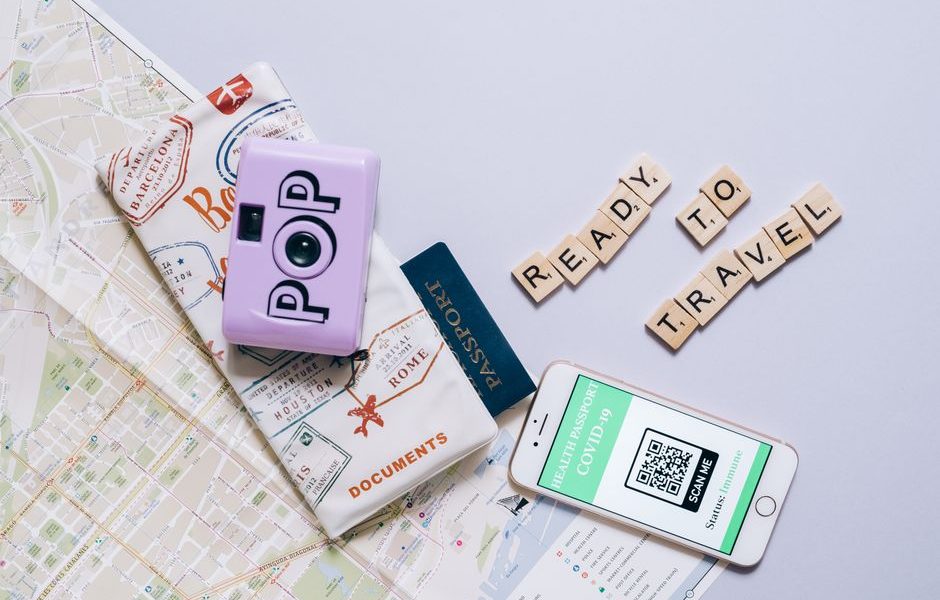
Most people think domestic travel means you can grab your phone and go. Then they hit a TSA checkpoint without a REAL ID, or their hotel asks for a credit card they left at home. I spent a weekend digging through travel forums, government websites, and real traveler horror stories to find the six documents that solve these problems before they happen.
1. The Primary Photo ID That Actually Works Everywhere
Your standard driver’s license works for most domestic flights. But starting May 2026, the Transportation Security Administration (TSA) will require a REAL ID-compliant license for all air travel within the United States. If your license has a star in the upper right corner, you’re good. If not, you need a different document.
What counts as a REAL ID
REAL ID-compliant licenses have that star. Twenty-seven states already issue them. Check your state’s DMV website to see if yours is compliant. If it isn’t, bring your U.S. passport or passport card as your primary ID. The passport card ($30 for adults) is cheaper than a full passport book and fits in your wallet. It works for domestic air travel and land/sea crossings to Canada, Mexico, and the Caribbean.
When your license won’t cut it
Federal buildings, military bases, and nuclear power plants require REAL ID or a passport. If you’re visiting a national park that requires ID for entry (like the Statue of Liberty), a standard license works. But if you’re flying to a border state and plan to cross into Canada for a day trip, the passport card saves you from carrying your full passport book.
One traveler on Reddit described getting denied boarding at LAX because her license wasn’t REAL ID compliant. She missed her flight to Chicago. Don’t be that person.
2. The Backup ID Nobody Thinks About

Losing your wallet is the second most common travel disaster after missed flights. If your primary ID disappears, a birth certificate combined with a credit card can get you through some domestic checkpoints. Not all airlines accept it, but Southwest and Delta have policies allowing alternative ID verification with a birth certificate and secondary documents.
The real trick is carrying a photocopy of your passport’s photo page and your driver’s license. Keep it in a separate bag from your originals. If you lose everything, that photocopy gets you into a U.S. embassy or consulate (even domestically) to get emergency travel documents. It also helps police verify your identity if your wallet gets stolen overseas.
Smart travelers also take a photo of their ID and store it in a secure cloud folder. Google Drive and iCloud both work. Make sure it’s a clear, front-and-back shot.
3. Health Insurance Cards (Physical or Digital)
This is the document people forget most often. You don’t plan to get sick on a weekend trip to Portland. But if you do, and you can’t show your insurance card, you might pay out of pocket for an ER visit that could cost $2,000 for a simple strep throat test.
Most insurers now accept digital ID cards through their mobile apps. Download your card’s PDF before you leave. Medicare and Medicaid cards must be physical in some states — check with your plan. If you have a high-deductible health plan (HDHP) with an HSA, bring your HSA debit card too. It’s separate from your regular debit card and has different spending rules for medical expenses.
One traveler I know broke her ankle hiking in Zion National Park. She had her insurance card in her phone’s Apple Wallet. The hospital accepted it, and her out-of-pocket cost was $150 instead of the $4,500 they would have charged without proof of insurance.
4. The Credit Card That Should Never Leave Your Pocket
Hotels, rental car agencies, and even some airlines require a credit card for incidentals. Debit cards work, but they freeze a hold on your account. That hold can be $200 for a hotel room or $500 for a rental car, and it might not release for 7-10 business days.
Bring a Visa or Mastercard — American Express and Discover are accepted less frequently at smaller hotels and gas stations. The Chase Sapphire Preferred ($95 annual fee, waived first year) is the most common recommendation among travel hackers because it has no foreign transaction fees and includes primary rental car insurance. For a no-fee option, the Capital One Quicksilver (1.5% cash back, no annual fee) works everywhere.
What happens when your card gets declined
Call your bank before any domestic trip that takes you more than 100 miles from home. Even if you don’t leave the country, banks flag out-of-state transactions as fraud. I’ve had my card declined at a gas station in rural Montana because I live in New York. A five-minute call to the bank fixed it, but I was stranded for 45 minutes.
| Card Type | Best For | Annual Fee | Foreign Transaction Fee |
|---|---|---|---|
| Chase Sapphire Preferred | Rental cars, hotels, international | $95 | 0% |
| Capital One Quicksilver | Everyday spending, no-fee option | $0 | 0% |
| Discover it Miles | Cash back, domestic travel | $0 | 0% (limited acceptance abroad) |
5. TSA PreCheck or Global Entry Membership Card
If you fly more than twice a year, TSA PreCheck ($78 for five years) saves you from removing shoes, laptops, and liquids. The membership card itself isn’t required at the checkpoint — your Known Traveler Number (KTN) linked to your boarding pass is enough. But the card comes in handy when you’re booking a flight and the airline system doesn’t pull up your KTN automatically.
Global Entry ($100 for five years) includes TSA PreCheck plus expedited customs clearance for international arrivals. The card serves as a secondary ID that’s accepted at TSA checkpoints. Some travelers use it as their primary ID because it’s harder to counterfeit than a driver’s license. If you fly internationally even once a year, Global Entry is the better deal.
Apply online first. The interview wait times vary by airport — some locations have appointments available in two weeks, others take three months. Do this before you book your next trip.
6. Digital Copies of Everything (The One That Saves You)

Paper documents get lost, soaked, or stolen. Digital copies live in your phone and cloud storage. Before any trip, take clear photos of your driver’s license (front and back), passport (photo page), health insurance card (both sides), credit cards (front only — never photograph the CVV), and any membership cards.
Store them in a password-protected folder. Apple’s Notes app allows locked notes. Google Drive has a similar feature. Do not store them in your regular photo gallery where anyone who steals your phone can access them.
Email yourself a copy too. If you lose your phone and your wallet, you can log into your email from a library computer and access your documents. It’s an extra step that takes 30 seconds and can save you hours at a government office.
What to do if you lose everything
Call your bank immediately to freeze your cards. Then call the nearest U.S. embassy or consulate if you’re abroad, or the local DMV if you’re domestic. Your digital copies prove your identity and speed up replacement. Without them, you’re waiting for someone to verify your identity through phone calls and background checks — which can take 24-48 hours.
The traveler who lost their wallet in the Grand Canyon spent three days hitchhiking back to Phoenix because they had no ID, no cards, and no digital backups. They had a photo of their license on their phone, but it was in their regular gallery, and the phone was dead. Charge your phone before you leave, and keep a physical backup somewhere separate.
What Most People Get Wrong About Domestic Travel Documents
The biggest mistake is assuming domestic travel means zero documentation. It doesn’t. TSA requires ID for all passengers 18 and older. Hotels require a credit card at check-in. Rental car agencies require a valid driver’s license AND a credit card in the same name. If your name on your license doesn’t match your credit card (due to marriage, divorce, or a typo), you’ll be denied service.
Second mistake: carrying everything in one place. A single wallet or purse is a single point of failure. Split your documents. Keep your primary ID and main credit card in your front pocket. Put your backup ID and a second card in your bag. Store digital copies in the cloud. If you lose one set, you still have the other.
Third mistake: forgetting that children need documents too. Minors don’t need ID for domestic flights when traveling with an adult, but they do need a birth certificate for cruises and international travel. If you’re taking a domestic cruise (like Alaska from Seattle), every passenger needs a government-issued ID. For kids under 18, that means a birth certificate or passport.
The fourth mistake is ignoring expiration dates. Your driver’s license expires. Your passport expires. Your health insurance card renews every year. Check every document’s expiration date at least 30 days before your trip. If anything expires within 90 days, renew it now. Government agencies take 6-12 weeks to process renewals during peak seasons.